
What Are the Different Types of Coliving? A Complete Guide to This New Way of Living
- Horizonte Coliving

- Apr 23, 2025
- 5 min read
In recent years, the term coliving has gained momentum in Brazil and around the world. Rooted in the idea of sharing not just space but also experiences, values, and a sense of community, coliving has evolved into a wide range of styles — and today, there’s a coliving space out there for nearly every taste, lifestyle, and need.
But what exactly are the different types of coliving out there? Are they all the same? And most importantly: how do you know which one is the right fit for you?
In this post, we break down the main coliving models you’ll find in Brazil and beyond, clearly explaining what sets them apart. And of course, we’ll also highlight the kind of coliving that’s gaining attention for putting community at the center — one of the strongest pillars for those looking for more than just a place to sleep.
Ready to dive in?
1. Corporate Coliving: Convenience and a Focus on Work
This type of coliving emerged to meet the needs of professionals who are constantly on the move — digital nomads, expats, people working on temporary projects, executives in transition, or entrepreneurs looking for a functional place to live and work.
The goal here is to offer convenience and a professional setup. These spaces are usually well-located, close to business districts, and equipped with private suites, coworking areas, cleaning services, maintenance, and often, networking opportunities with like-minded residents.
It’s the kind of coliving that appeals to those who prioritize comfort, efficiency, and productivity — without necessarily being interested in deep social interaction with other residents.
2. Community-Based Coliving: Connection, Shared Values, and a Collective Identity
While the corporate model centers on efficiency, community-based coliving focuses on human connection.
This isn’t just about sharing a house — it’s about sharing values, interests, meaningful experiences, and real moments. These spaces are designed to foster interaction, create bonds between people from different walks of life, and build a genuine sense of belonging.
It’s not uncommon for these colivings to function like small-scale communities, with shared rules, collective decision-making, and activities that strengthen the group dynamic — think potluck dinners, themed parties, discussion circles, art shows, cultural exchanges, in-house projects, and much more.
This is where deep friendships are born, creative partnerships emerge, and projects take shape that go far beyond the house itself. And while this model is still less common in Brazil, it’s been growing fast in recent years — attracting people who want to live a more intentional and connected life.
3. Rural Coliving: Nature, Simplicity, and a New Pace of Life
More and more people are trading the noise of big cities for the quiet of the countryside. That’s where rural coliving comes in — spaces located away from urban centers, often focused on sustainability, collective living, and reconnecting with nature.
These colivings usually have a strong ecological and collaborative vibe. Some operate as regenerative farms, ecovillages, agroecological sites, or hubs for social and artistic experimentation. Others focus on simplicity, healthy food, care for the land, and building deep, intentional community life.
This type of coliving has been growing steadily — not only in Brazil, but especially in Europe, where it already represents a significant share of the market. It attracts people who want to live at a slower pace, with greater presence, purpose, and connection to their surroundings.
4. Themed Coliving: Lifestyle and Identity-Focused Communities
Another interesting branch of coliving includes spaces designed for specific groups — whether based on a life stage, a shared interest, or a common cause.
Here are a few common examples:
Colivings exclusively for women
Colivings for people over 50
Pet-friendly colivings designed for animal lovers
Artist residencies functioning as coliving spaces
Colivings with spiritual or therapeutic approaches
This model offers a more tailored experience and can be ideal for those who want to live with people who share a similar worldview — or who are navigating the same chapter of life.
5. Student Coliving: Youthful Vibes and Academic Life
Similar to the traditional concept of student housing or shared apartments, student coliving is geared toward university students, exchange students, or recent graduates.
These spaces usually offer a simpler setup, with affordable prices, strategic locations close to campuses, and a laid-back, youthful atmosphere. Basic house rules and shared responsibilities are common, with a more spontaneous and flexible social dynamic.
This model can be a great first step for those leaving their family home and learning how to live with others in a more democratic, shared environment.
But Wait… Isn’t Every Coliving a Community?
That’s a very common — and totally fair — question. After all, the word coliving itself implies living together. So why talk about community-based coliving if, in theory, every coliving should be about community?
The key lies in the depth and intention behind the shared living experience.
Not all colivings truly encourage connection between residents. Many follow a model that feels more like a hotel or serviced apartment: private rooms, clear rules, ready-to-go services, and little interaction among those who live there. It’s a valid way of living — but it leans more toward convenience than connection.
Community-driven coliving, on the other hand, is built around the idea of forming real relationships. It invites people to take part, to open up, to engage actively and emotionally. And that changes everything.
Horizonte Coliving: a home with open doors for those who truly want to live together.
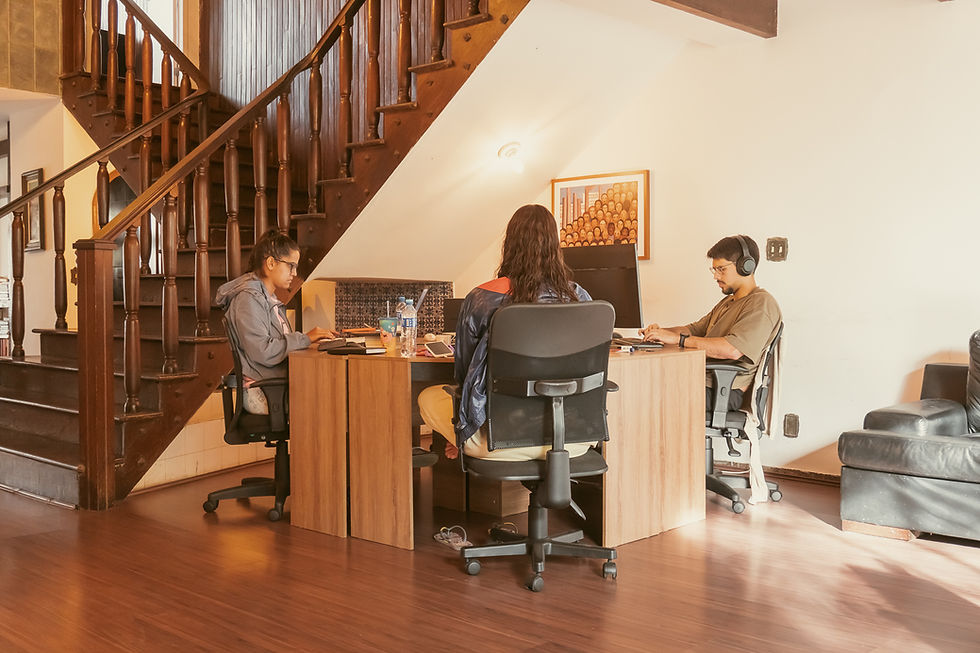
That’s where Horizonte Coliving comes in — a shared home in Belo Horizonte built around the soul of community. What brings people together here isn’t just the house itself, but a genuine desire to share life with presence, creativity, and connection.
We’re neighbors with the UEMG School of Fine Arts, and our backyard features a massive mural inspired by Clube da Esquina. Every now and then, we host cultural and social gatherings. Evenings often flow with vinyl records spinning, shared dinners, and long, soul-deep conversations in the living room. Music, art, and meaningful dialogue are the true heartbeat of our home.
You could say Horizonte Coliving fits within the community coliving model — with a touch of the thematic too, since we naturally attract people from creative, artistic, and collaborative backgrounds. All of this within a beautiful, well-equipped house, perfectly located in the heart of BH.

So, Which Type of Coliving Suits You?
If you’ve made it this far, you’ve already realized that not all colivings are the same. Some are more practical, others more emotional; some are youthful, others more niche.
The key is understanding what you’re looking for at this point in your life: connection? practicality? warmth? inspiration? security? creativity? Or maybe all of the above?
If your search is more about real connection, exchanging experiences, and finding a home with soul, it might be time to explore a true community coliving space. And if you’re in Belo Horizonte, Horizonte Coliving could be exactly what you’re looking for.
Want to check out Horizonte Coliving?
We’re an open, fun, and welcoming community right in the heart of BH. If you’re looking for a new way to live — more human, relaxed, and creative — take a look at our website, follow us on Instagram @horizontecoliving, or reach out on WhatsApp: +55 31 99537-1376.
Our doors are open. Ready to live together?


Comments